From Data to Impact -
The MultiOmics Centre Driving Innovation in Food, Agriculture and Health
Integrated Omics Expertise
for Research and Innovation
The MultiOmics Centre MOC offers research services to support South Tyrol’s food, agriculture, health and biotech sectors. We are a team of interdisciplinary experts that provide experimental and analytical services to local research organizations and companies.
The MOC provides all the necessary laboratory infrastructure and trained personnel for carrying out experiments in the fields of genomics, transcriptomics, proteomics, and metabolomics. Besides the laboratory infrastructure, high-performance computer clusters, data analysis and data storage are provided.
The MOC offers support at all stages of your project. From project planning over lab analyses to result evaluation and implementation – to inte grate omics technologies into your R&D processes.
The complementary expertise of Laimburg Research Centre and Eurac Research is combined and integrated in the MOC to bridge research and application, strengthen local companies, promote innovation and support the economic development of the region.

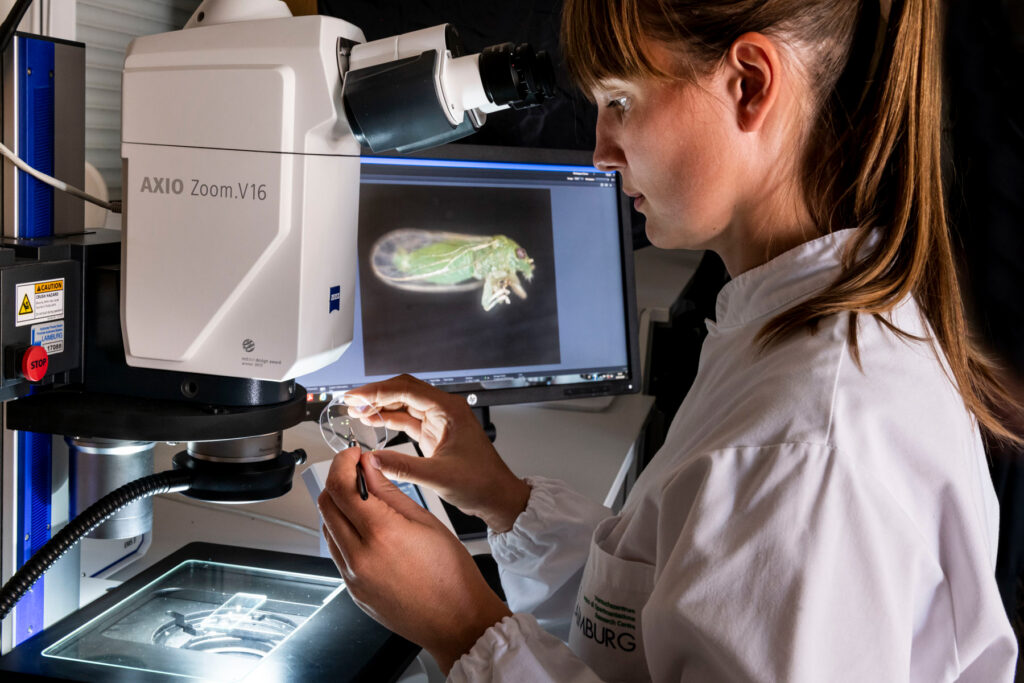
Genomics & Transcriptomics
Genomics and transcriptomics can drive targeted innovation in Food & Health R&D by linking molecular mechanisms to product performance, safety, and personalized nutrition.
Genomics
in Food and Health R&D
Comprehensive analysis of an organism’s DNA to reveal genes and variants that underlie traits important for food quality, safety, and health outcomes. Genomics can be used to describe the origin of plant or meat products or to identify and quantify the microbial content in a product.
Applications
- Identification and selection of plant and microbial strains with higher yield, resilience, or functional ingredient profiles.
- Identification of foodborne or beneficial microbes to improve safety, traceability, and fermentation performance.
- Linking human genetic variants to differential responses to nutrients and bioactive compounds.
Examples
- Selecting drought-tolerant wheat lines, disease-resistant cattle or beneficial strains for stable yield, better flavor or shelf life.
- DNA barcoding and metagenomics for verifying food authenticity, detecting adulteration, and tracking supply chains as well as to characterize microbial communities in fermented foods (cheese, wine, yogurt).
- Profiling gut microbiota for links to immunity, obesity, and neurodevelopment.
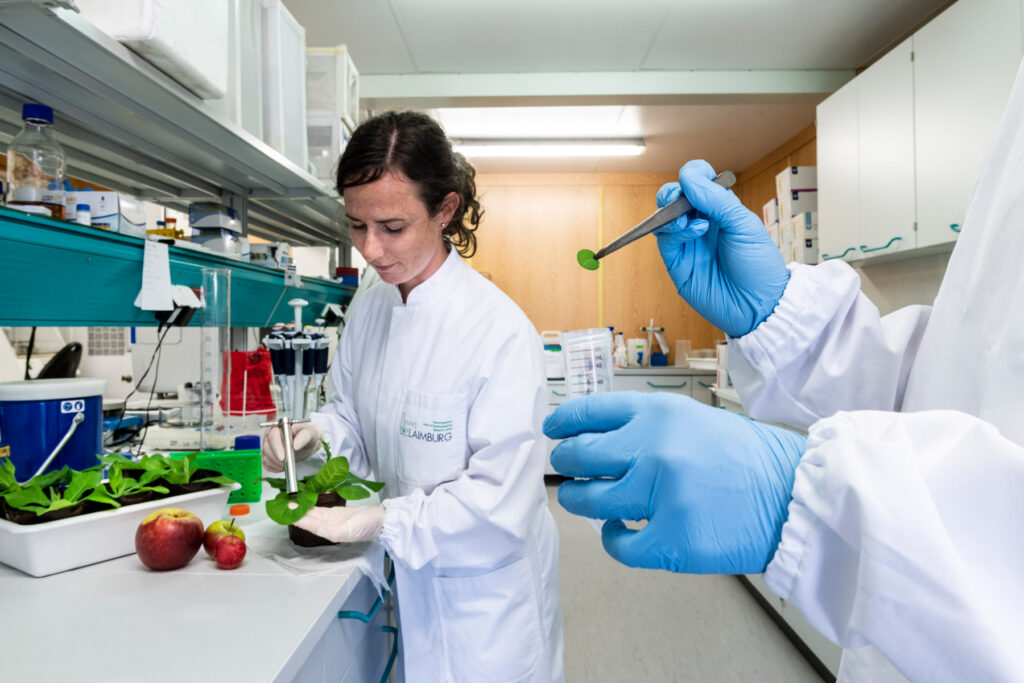
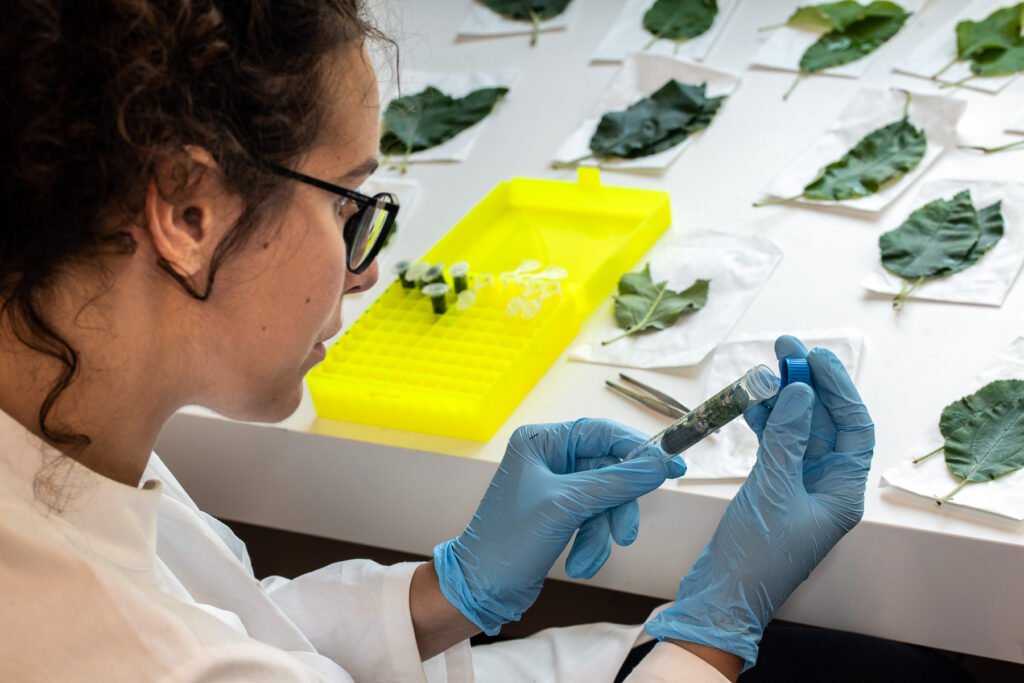
Transcriptomics
in Food and Health R&D
Profiling gene expression to capture how food, processing, or diet dynamically influence biological pathways relevant to health, functionality, and safety. Transcriptomics measures which genes are actively expressed under specific conditions in plants, microbes, or human tissues.
Applications
- Monitoring how processing, storage, or fermentation conditions reprogram microbial and plant gene expression, guiding optimization of flavor, texture, and shelf life.
- Decoding how dietary components, nutraceuticals, or functional foods modulate pathways such as inflammation, metabolism, and immune responses.
- Using expression “fingerprints” as sensitive biomarkers for product safety, toxicity assessment, and mechanism-of-action studies.
Proteomics
and Metabolomics
Proteomics and metabolomics enable precision-driven innovation in Food & Health R&D by uncovering protein functions and metabolic pathways that influence product quality, safety, health, and efficacy. These approaches provide deep insights into biochemical interactions, supporting the development of personalized nutrition strategies, and functional foods aligned with health outcomes.
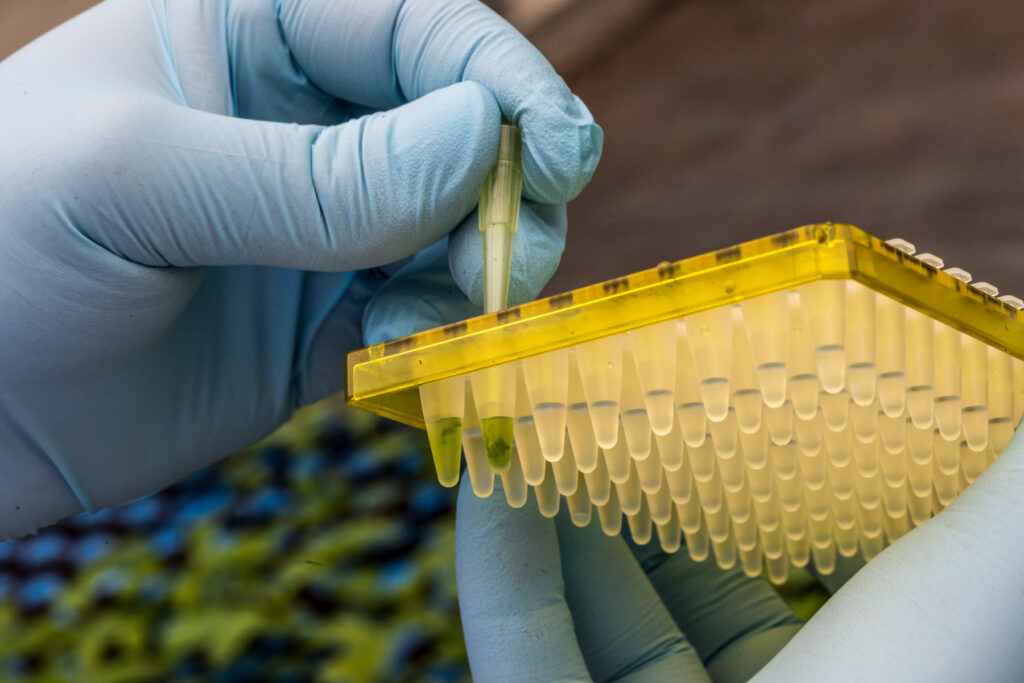
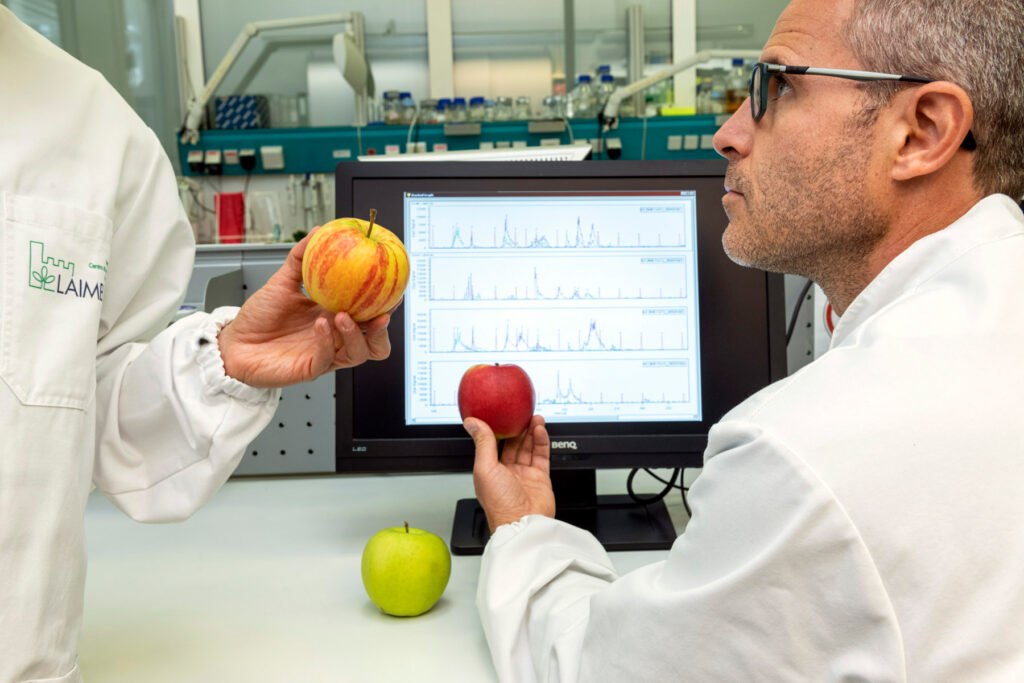
Proteomics
Comprehensive analysis of an organism’s protein composition to reveal expression patterns, structures, and interactions that influence food quality, safety, and health outcomes. Proteomics can be used to characterize protein profiles in plant or animal products, assess allergenicity, and monitor changes during processing or storage.
Applications
- Identification and selection of plant or microbial strains based on protein markers linked to yield, resilience, or functional properties.
- Detection and quantification of allergens or bioactive proteins to improve safety, nutritional value, and product performance.
- Support of personalized nutrition by linking protein expression and digestion patterns to individual health responses.
Metabolomics
Comprehensive analysis of small molecules, known as metabolites, within biological systems to reveal biochemical pathways that impact food quality, safety, and health outcomes. Metabolomics can be used to profile nutrient composition, monitor fermentation processes, and assess metabolic changes during food processing or storage.
Applications
- Identification of metabolic markers for plant or microbial strains with improved yield, resilience, or nutritional properties.
- Detection of contaminants, toxins, or beneficial metabolites to enhance food safety, traceability, and functional ingredient development.
- Support of personalized nutrition by linking individual metabolic profiles to responses to specific diets and bioactive compounds.
Examples
- Metabolites in plants play important roles in response to stress and in preventing infection or growth of pathogens and thus provide a gateway to tailoring plant traits to meet human needs.
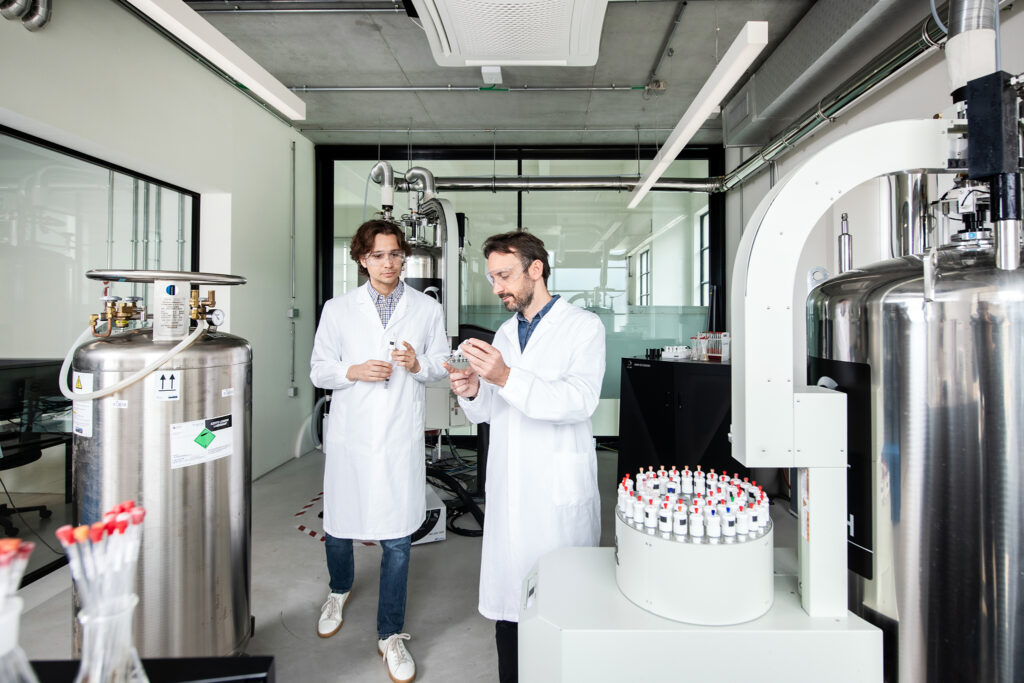
- Metabolomics-based analytical technology, such as nuclear magnetic resonance (NMR), gas chromatography-mass spectrometry (GC-MS), and liquid chromatography-mass spectrometry (LC-MS), has become a viable tool for the detection of these metabolites at ultralow levels.
- Targeted metabolomics concentrating on specific metabolic pathways, such as amino acid metabolism, lipid oxidation, energy metabolism, and gut microbiome-derived metabolites, provide absolute quantitation of key metabolites to guide personalized nutrition.
Bioinformatics &
Computing Infrastructure
High-performance computing and scalable data storage designed for secure processing, backup, and long-term management of large-scale omics datasets. The Bioinformatics Computing Cluster at the MOC – MultiOmics Centre for Food and Health enables reliable analysis of genomics, transcriptomics, proteomics, and metabolomics data according to current scientific standards, ensuring accuracy, reproducibility, and data integrity. Secure data handling and protection of sensitive information are integral parts of the infrastructure.
Applications
- Provision of advanced bioinformatics resources for companies and research partners without the need for in-house high-performance computing infrastructure.
- Standardized and reproducible analysis workflows for genomics, transcriptomics, proteomics, and untargeted metabolomics, supported by robust pipelines.
- Integration of MultiOmics data across molecular layers to reveal complex biological mechanisms, supporting innovation, product development, and quality improvement in food, agriculture, biotechnology, and health.