In haymilk production, cows must be fed without silage. To verify this requirement, cyclopropane fatty acids (CPFA) can be used as biomarkers, because they can be associated with diets containing maize silage. To use these markers reliably, however, sensitive detection and accurate quantification are essential—especially when target compounds are present at low concentrations.
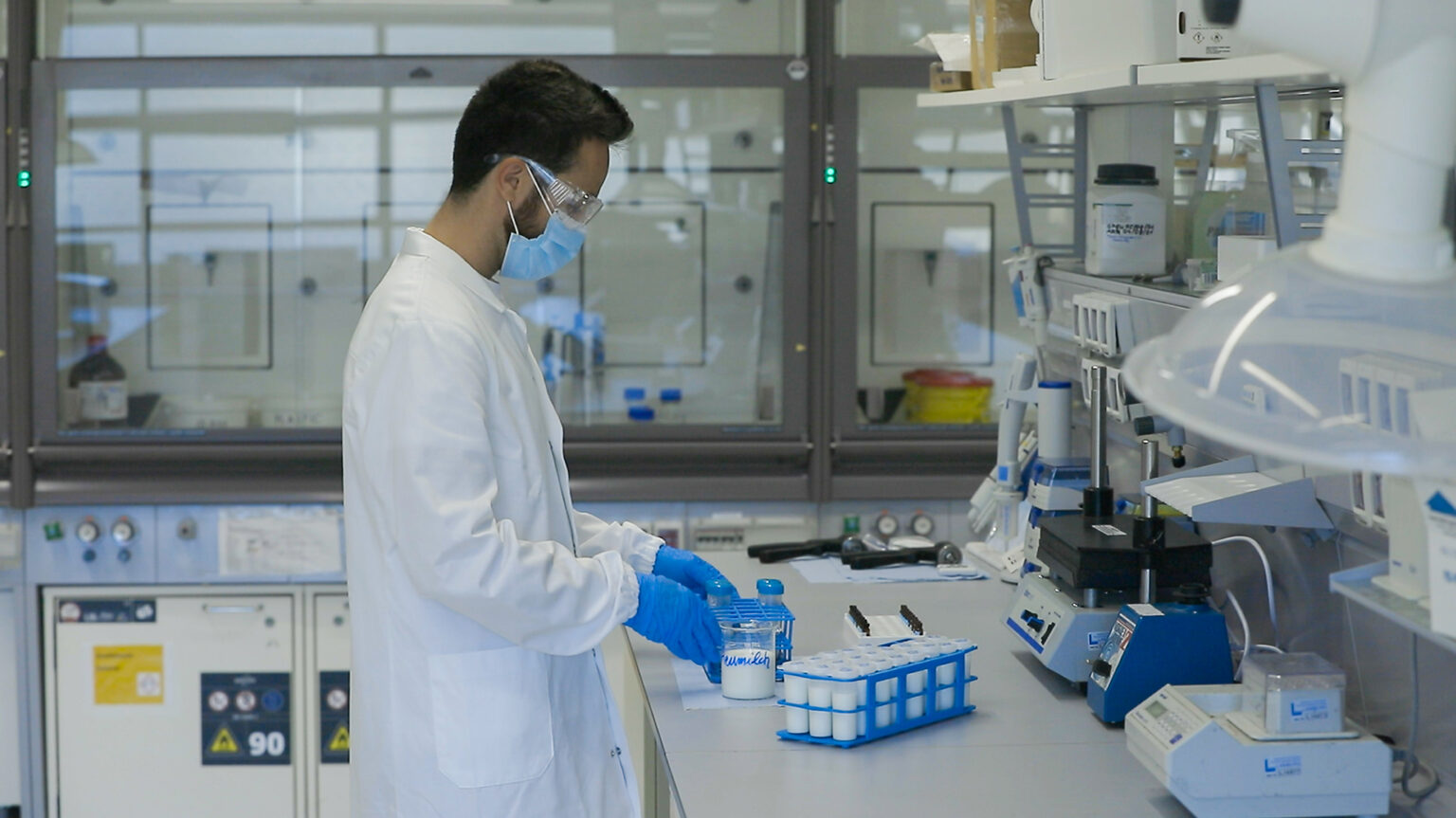
In the project HEUMILCH, funded by the European Regional Development Fund, an omicsdriven approach was used to track CPFAs in both feed and milk under real farming conditions in South Tyrol. NMR spectroscopy and a refined GC–MS method were combined in a MultiOmics-style analytical workflow, with NMR enabling rapid, non-destructive screening directly in complex food matrices and GC-MS provding high-resolution separation and precise quantification of key CPFAs. Applying this combined approach to milk from cows fed diets with or without silage, the results were clear: no CPFAs were detected in haymilk, while they did appear in the vast majority of milk samples from farms using silage. This finding demonstrates that CPFAs are a strong marker for verifying silage-free feeding.
By integrating complementary technologies, our MultiOmics-enabled strategy could thus support more reliable dairy authenticity testing and strengthen quality and origin verification for high-value products.